
The Community Science Lab - sites of activity (1)
Barry, South Wales
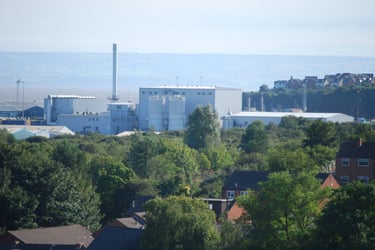
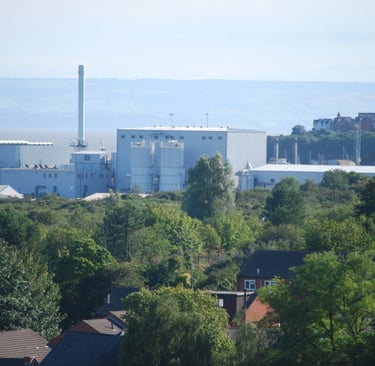
In 2006, the Unitary Development Plan (UDP) for the Vale of Glamorgan permitted construction of 'light industry' in the East Docks regeneration area. In 2008, a wood biomass energy plant was proposed by a developer, Sunrise Renewables (Barry) Ltd. The site was close to existing housing in the Castleland ward (<400 metres away) and later-to-be-built regenerated dockside housing on the western edge of the East Docks (<100 metres away). Castleland ward, and certain other wards immediately downwind of the site, like Gibbonsdown, are at a similar elevation to the top of the proposed stack. These wards have always scored very low on successive indices of multiple deprivation in Wales (see, for example, WIMD 2019). At this time, certain concerned residents formed the Docks Incineration Action Group (DIAG).
In 2015, Aviva Investors took over the site from Sunrise and built the current facility on spec before full planning permission had been granted (a license to operate was agreed in 2017 with Natural Resources Wales). Some local residents were therefore very concerned about future local air quality in Barry despite assurances from Aviva Investors and its operator that their plasma gasification process, which heats waste to very high temperatures and involves little oxygen, was perfectly safe in terms of pollution coming from the stack.
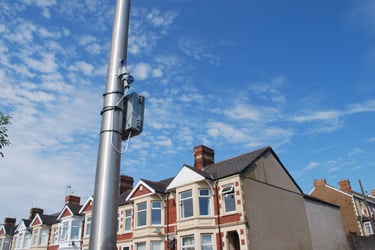
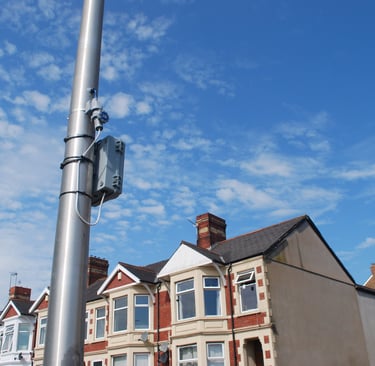
Civil society groups, the Barry Citizen Science Group (BCSG) and Beautiful Barry, then formed in 2018 from DIAG members and they contacted Cardiff University for support. Between 2021 and 2023, a series of eight Smart Citizen air quality monitors (v 2.1) from FabLab Barcelona and a single professional Think Air monitor from Vindico were established in the town through participatory action research undertaken by the BCSG and the university.
Thanks to an Economic and Social Sciences Research Council (ESRC) Civil Society grant, a year's worth of air quality data - a 'baseline' - was co-constructed by the BCSG and Wales' WISERD research institute before the biomass facility could be turned on. Community members were involved in air quality workshops held in Barry and at the University's sbarc/spark facility. Eight community members agreed to host the Smart Citizen monitors at their homes.
Then, in late 2024, citing technical problems with the plasma gasification incineration process at three sites it owns (including plants at Hull and Boston), Aviva Investors dropped its support for the plant in Barry. Planning permission still had not been granted. The site is currently mothballed. There are unconfirmed reports that parts of the plant may have been removed for use elsewhere. In 2026, the plant requires a new EIA as it is scheduled for demolition
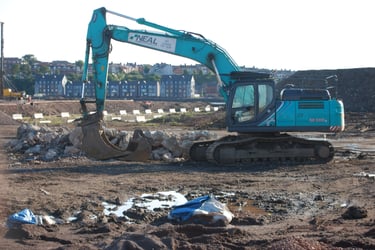
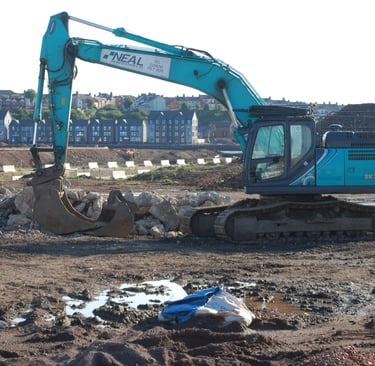
© ESRC / Nick Hacking
© ESRC / Nick Hacking
© ESRC / Nick Hacking